Stand up. Without adjusting anything, notice where your head sits relative to your shoulders. Notice whether your shoulders are level or one is higher than the other. Notice whether your lower back is arched, flat, or somewhere in between. If you're like most adults who spend hours sitting at a desk, driving, or looking at a phone, what you'll find is not what your skeleton was designed for: the head is forward, the upper back is rounded, the shoulders are internally rotated, and the lower back is either excessively arched or slumped. This is not a cosmetic issue. It is a functional one — and it is precisely what classical Pilates was built to address.
What 'Good Posture' Actually Means
Good posture is not about standing up 'straight' by throwing the shoulders back and puffing the chest out. That's military posture, and it creates as many problems as it solves — primarily excessive lumbar lordosis and chronic tension in the upper trapezius. In clinical terms, optimal posture refers to the alignment of the body's segments — head, thorax, pelvis, and lower extremities — in a configuration that minimises stress on supporting structures while maintaining balance against gravity. Kendall, McCreary and Provance, in their landmark textbook Muscles: Testing and Function with Posture and Pain (1993), defined ideal standing alignment as a plumb line passing through the ear, shoulder, hip, knee, and ankle. Deviation from this line in any direction indicates muscular imbalance — some muscles too tight, others too weak, and the nervous system habituated to a pattern that feels normal but isn't neutral.
Why Posture Deteriorates
Modern posture doesn't collapse overnight. It erodes gradually through repetitive positions. Eight hours of sitting shortens the hip flexors and weakens the gluteals. A forward head — common in anyone who reads, types, or scrolls — stretches and weakens the deep neck flexors while tightening the suboccipital muscles at the skull base. Internally rotated shoulders, driven by desk work and phone use, shorten the pectorals and anterior deltoids while lengthening the mid-trapezius and rhomboids. Over months and years, the nervous system adapts these positions as baseline — which is why simply remembering to 'sit up straight' doesn't work. The body returns to its habituated pattern within seconds because that pattern is what the neuromuscular system recognises as home.
"I can tell what a person does for a living within minutes of watching them move. The desk worker has a specific pattern — forward head, rounded upper back, weak glutes. The mother who carries a toddler on one hip has another. These patterns are not faults; they're adaptations. But they can be retrained." — Katie Kollar
How Classical Pilates Retrains Alignment
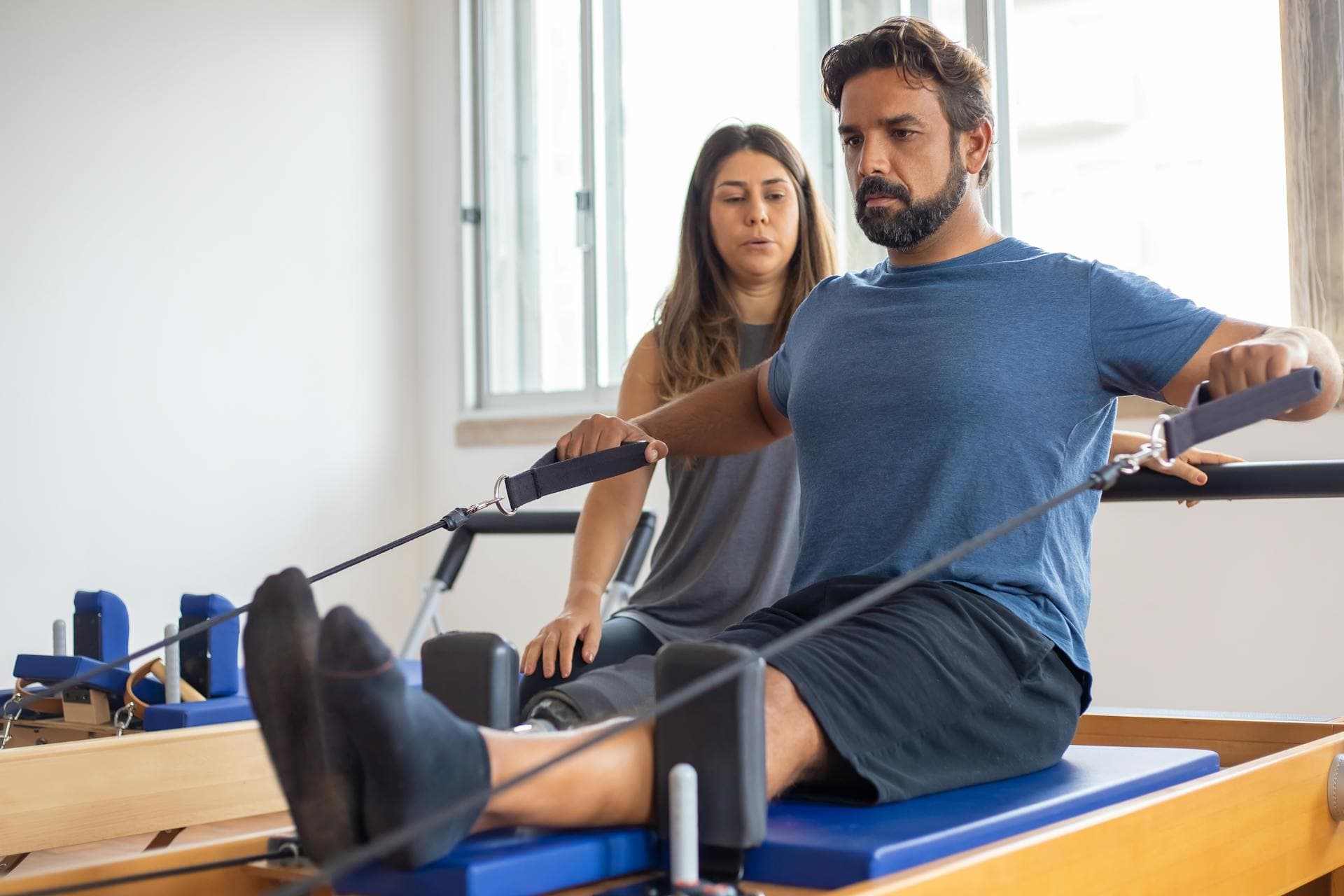
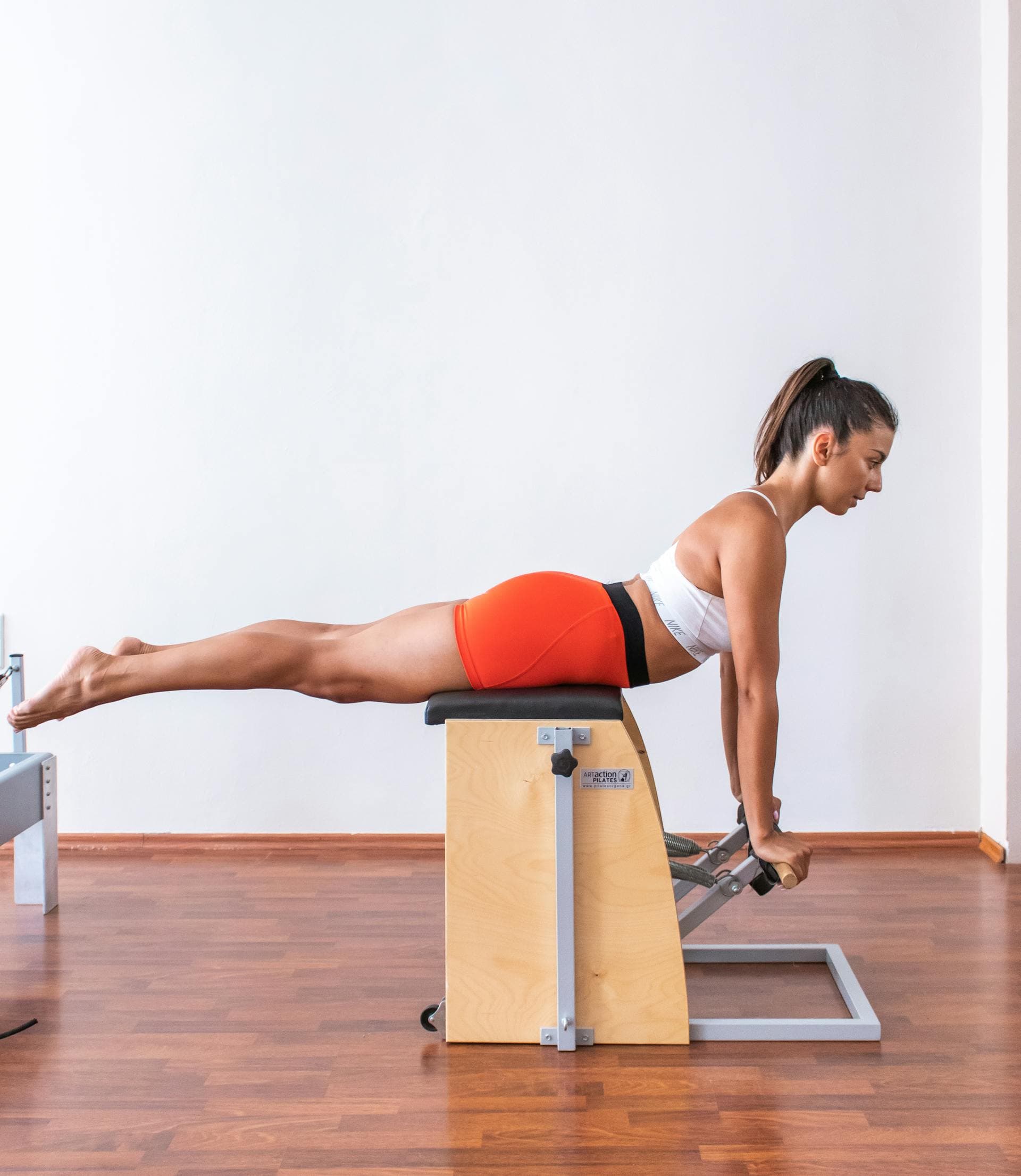
Classical Pilates addresses posture not by adding strength on top of dysfunction, but by reorganising the body from its centre outward. Every exercise begins with powerhouse engagement — the deep abdominal cylinder that stabilises the pelvis and lumbar spine. From this stable centre, the method systematically opens what's tight and strengthens what's weak. The Swan and Swan Dive strengthen the thoracic extensors that combat rounded upper backs. The Pulling Straps series on the Reformer opens the chest and strengthens the posterior shoulder. Leg Springs on the Cadillac re-engage the deep hip stabilisers. The Spine Stretch Forward teaches spinal articulation with axial length. None of these exercises targets posture in isolation — they train the body to find and sustain neutral alignment through integrated movement. Understanding the six principles — especially centering and precision — is essential to grasping why this approach works.
What the Research Shows
A 2009 study by Kuo, Tully and Galea, published in Spine, measured sagittal spinal posture in healthy older adults before and after a Pilates programme. The results showed significant improvements in thoracic kyphosis (upper back rounding) and forward head posture — two of the most common postural deviations in ageing populations. Emery and colleagues (2010), in Clinical Biomechanics, found that a Pilates training programme improved arm-trunk postural control, suggesting that the method's effects extend beyond static alignment to dynamic postural stability — how well the body maintains alignment during movement. These findings align with Ferreira, Ferreira and Hodges' 2004 research in Spine demonstrating that altered recruitment patterns of the deep abdominal muscles contribute directly to postural dysfunction, and that retraining these recruitment patterns improves both posture and pain outcomes.
The Apparatus Advantage
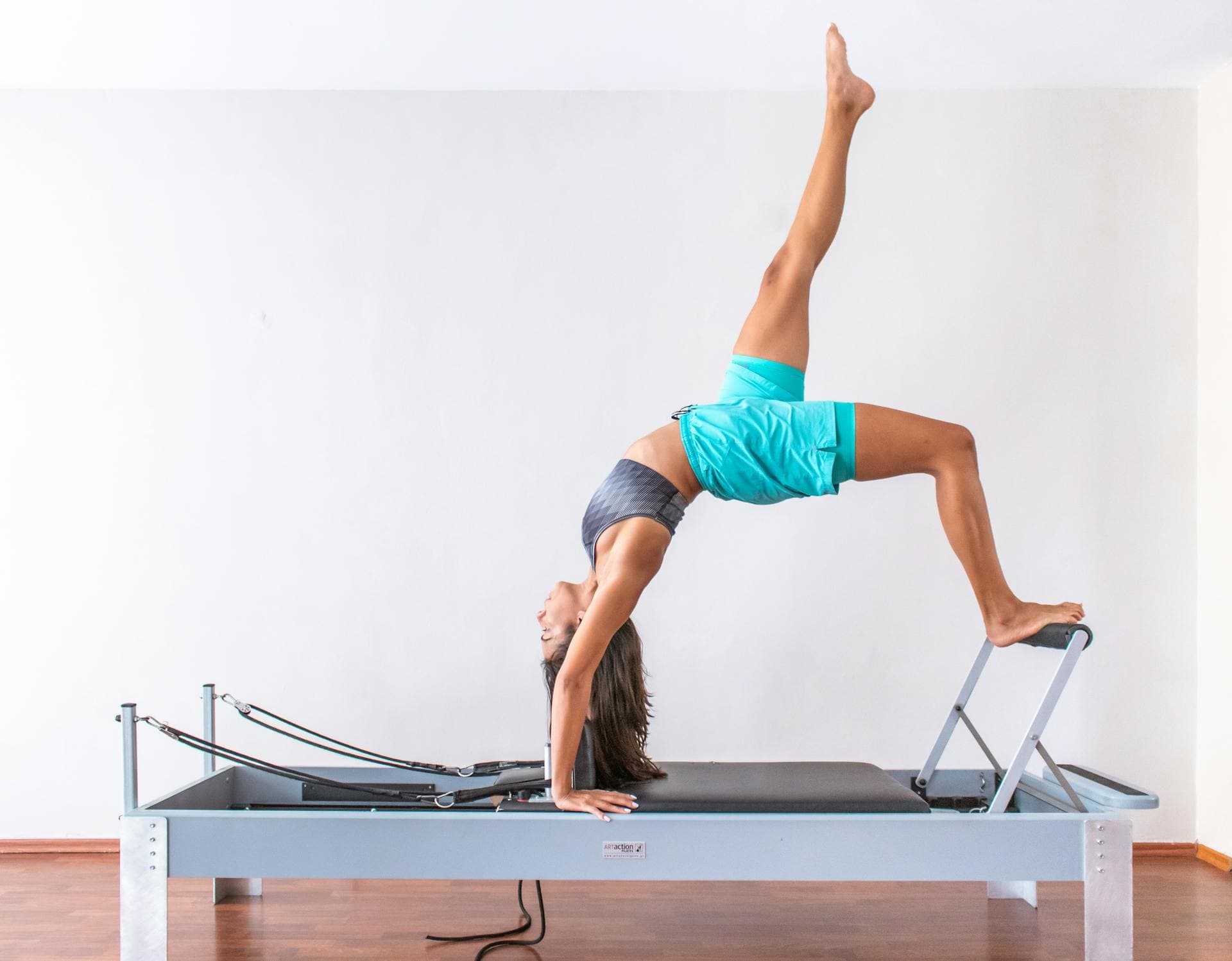
While mat work builds postural strength, the apparatus is where postural change accelerates. The Reformer's Footwork series, performed supine, trains lower extremity alignment against spring resistance while the spine rests in a supported position — allowing the teacher to observe and correct pelvic tilt, rib placement, and head position without the complication of gravity. The Cadillac's Push-Through Bar series opens the thoracic spine in both flexion and extension, directly addressing the rounded upper back that desk workers develop. The Spine Corrector — one of Joseph Pilates' most underappreciated inventions — is shaped to support and extend the thoracic spine, opening the chest, stretching the hip flexors, and teaching the body what neutral spinal curves actually feel like. For many clients, lying over the Spine Corrector is the first time they've felt their upper back extend beyond its habitually rounded position. All of this apparatus is available when you visit our studio.
"The Spine Corrector is the apparatus I wish every desk worker had access to. Five minutes a day on it would undo hours of sitting. In the studio, it's one of the first things I use with clients who present with thoracic kyphosis — it teaches the spine what extension feels like, and the body remembers." — Katie Kollar
The Upper Back and Shoulders
The thoracic spine and shoulder complex deserve specific attention because they're where postural dysfunction is most visible — and most consequential. A kyphotic upper back doesn't just look poor; it restricts breathing capacity, compresses the anterior shoulder, and can contribute to impingement syndromes and neck pain. In classical Pilates, exercises like the Swan — performed on the mat, on the Reformer, and on the Cadillac — train thoracic extension against the habitual flexion pattern. Pulling Straps and the T on the Reformer strengthen the posterior deltoids, rhomboids, and mid-trapezius that are chronically lengthened in desk workers. The Chest Expansion exercise, performed kneeling on the Reformer, integrates thoracic extension with controlled breathing and scapular retraction. These exercises don't just stretch what's tight or strengthen what's weak — they teach the nervous system a new default position.
Posture at Your Desk: What Pilates Teaches You
One of the most practical outcomes of regular Pilates practice is heightened postural awareness during daily life. Clients report that after several weeks of training, they begin to notice when they're slumping at their desk — not because they're watching themselves, but because the body has learned what neutral alignment feels like and recognises departure from it. This proprioceptive training — the body's ability to sense its own position — is one of the mechanisms by which Pilates produces lasting postural change, as distinct from temporary corrections that fade as soon as you stop thinking about them. Clients also begin applying specific cues from their Pilates sessions to daily activities: engaging the lower abdominals before lifting, drawing the shoulder blades down before reaching overhead, maintaining a long spine while sitting.
Posture and Ageing
Postural deterioration accelerates with age. The thoracic kyphosis that begins with desk work in your twenties often deepens in your fifties and sixties as bone density decreases, intervertebral discs thin, and the thoracic extensor muscles weaken. Kuo and colleagues' 2009 findings are particularly relevant here: Pilates improved spinal posture in older adults, demonstrating that these age-related changes are not inevitable — they are modifiable with the right training stimulus. Classical Pilates is uniquely suited to this population because the apparatus provides support and resistance that can be calibrated precisely to the individual's capacity. A 65-year-old with osteopenia will train differently from a 35-year-old marathon runner, but both will work within the same progressive system. Our levels system ensures that progression matches readiness, regardless of age.
The Long Game
Postural change is not fast. A body that has spent twenty years in a forward-head, rounded-shoulder pattern will not reorganise in two weeks. But the process is reliable. The first changes are neurological — improved awareness, better activation of the deep stabilisers, a sense of what neutral feels like. Within two to three months of consistent practice, clients typically report that their default sitting and standing posture has shifted. By six months, the changes become visible to others: a longer neck, more open shoulders, a more upright carriage. These are not cosmetic improvements — they represent genuine biomechanical reorganisation that reduces strain on the spine, improves breathing capacity, and often resolves chronic tension headaches, neck pain, and lower back discomfort that clients had accepted as normal.
Joseph Pilates designed his method at a time when the human body moved far more than it does today. He couldn't have predicted smartphones, eight-hour desk jobs, or the epidemic of forward-head posture that defines modern life. Yet the system he created addresses these problems with remarkable precision — because the method doesn't target symptoms. It retrains the whole body to move from its centre, with length, with control, and with awareness. That retraining changes posture not as an isolated outcome but as a natural consequence of the work. View our timetable to start, explore pricing for package options, or book a private session for an individual postural assessment.