You take approximately 20,000 breaths a day. Most of them are shallow, unconscious, and biomechanically inefficient. Your shoulders rise. Your chest lifts. Your belly pushes outward. None of this is catastrophic — until you try to move with precision, stabilise your spine under load, or maintain focused effort for an hour. Then breathing becomes the limiting factor. Joseph Pilates understood this nearly a century ago, and he made breathing not just a principle of his method but its physiological foundation.
Joseph Pilates on Breathing
In Return to Life Through Contrology (1945), Pilates was blunt: 'Breathing is the first act of life and the last. Our very life depends on it.' He devoted more written space to breathing than to any single exercise. His instruction was specific: exhale fully, wring the lungs clean, and inhale deeply into the back and sides of the ribcage. He compared the lungs to a bellows — only effective when completely emptied before being refilled. This wasn't a metaphor for relaxation. It was a directive for movement quality. As Anderson and Spector (2000) noted in their overview of Pilates-based rehabilitation, the breath pattern Pilates prescribed is both a respiratory strategy and a motor control strategy, creating intra-abdominal pressure that supports the lumbar spine during movement.
Lateral Thoracic Breathing: The Pilates Pattern
The specific breathing technique used in classical Pilates is called lateral thoracic breathing. Instead of expanding the belly on the inhale — as in standard diaphragmatic breathing — you direct the breath into the sides and back of the ribcage while maintaining a deep engagement of the lower abdominals. Place your hands on the sides of your ribcage, just below the armpits. On the inhale, you should feel the ribs expand outward into your hands like an accordion. On the exhale, the ribs narrow, the abdominals deepen, and the pelvic floor lifts subtly. This pattern allows you to breathe fully while keeping the powerhouse engaged — something that belly breathing makes nearly impossible, because an expanding belly releases the very muscles Pilates demands you sustain.
"Most new clients breathe into their stomachs and think that's correct because someone told them 'breathe into your belly' in a yoga class. It's not wrong for yoga. But in Pilates, if your belly is pushing out, your powerhouse is off. Learning to breathe laterally is usually the single biggest shift in a client's first month." — Katie Kollar
The Diaphragm–Core Connection
The reason breathing matters so profoundly in Pilates is anatomical. The diaphragm — your primary breathing muscle — forms the roof of the powerhouse cylinder. The pelvic floor forms the base. The transversus abdominis wraps around the front and sides. When you inhale, the diaphragm descends, increasing intra-abdominal pressure. When you exhale, it rises, and the deep abdominals contract inward. These two systems — respiratory and stabilising — share the same anatomical space, which means they must coordinate or compete. Research by Hodges, Heijnen and Gandevia (2001), published in the Journal of Physiology, demonstrated that when respiratory demand increases, the postural activity of the diaphragm decreases — the body prioritises breathing over stability. Kolar and colleagues (2012), in the Journal of Orthopaedic & Sports Physical Therapy, further showed that people with chronic low back pain demonstrated altered diaphragmatic movement patterns compared to healthy controls, suggesting that poor breathing and poor spinal stability are linked at the neuromuscular level.
Breathing and Movement Timing
In classical Pilates, breathing is never random. Each exercise has a prescribed breath pattern: typically, you exhale during the effort phase and inhale during the return or preparation phase. In the Hundred, you inhale for five arm pumps and exhale for five — a rhythm that sustains continuous powerhouse engagement while maintaining steady oxygen delivery. In the Roll Up, you inhale to prepare and exhale as you articulate the spine off the mat. In Footwork on the Reformer, you inhale to press the carriage out and exhale to return. This coupling of breath to movement creates an internal metronome that coordinates the diaphragm, the deep abdominals, and the pelvic floor simultaneously. Understanding this timing is closely tied to the six principles — particularly control and flow.
"When a client's breathing clicks into place, everything else follows. The exercises become quieter, more controlled, more efficient. I can hear the difference before I see it — the room gets calm." — Katie Kollar
What Poor Breathing Looks Like
Poor breathing patterns are remarkably common and remarkably visible once you know what to look for. Apical breathing — where the upper chest and shoulders rise on every inhale — creates tension in the neck and trapezius muscles and prevents the lower ribs from expanding. Paradoxical breathing — where the belly pushes out on the exhale instead of the inhale — scrambles the coordination between the diaphragm and the abdominals. Breath-holding, perhaps the most common pattern under effort, spikes blood pressure, increases muscular tension throughout the body, and disengages the precisely timed abdominal contraction that Pilates demands. In the studio, correcting these patterns is one of the first priorities for any new client. It's part of the reason we recommend starting with a private session — breath retraining requires individual attention.
Breathing on the Apparatus
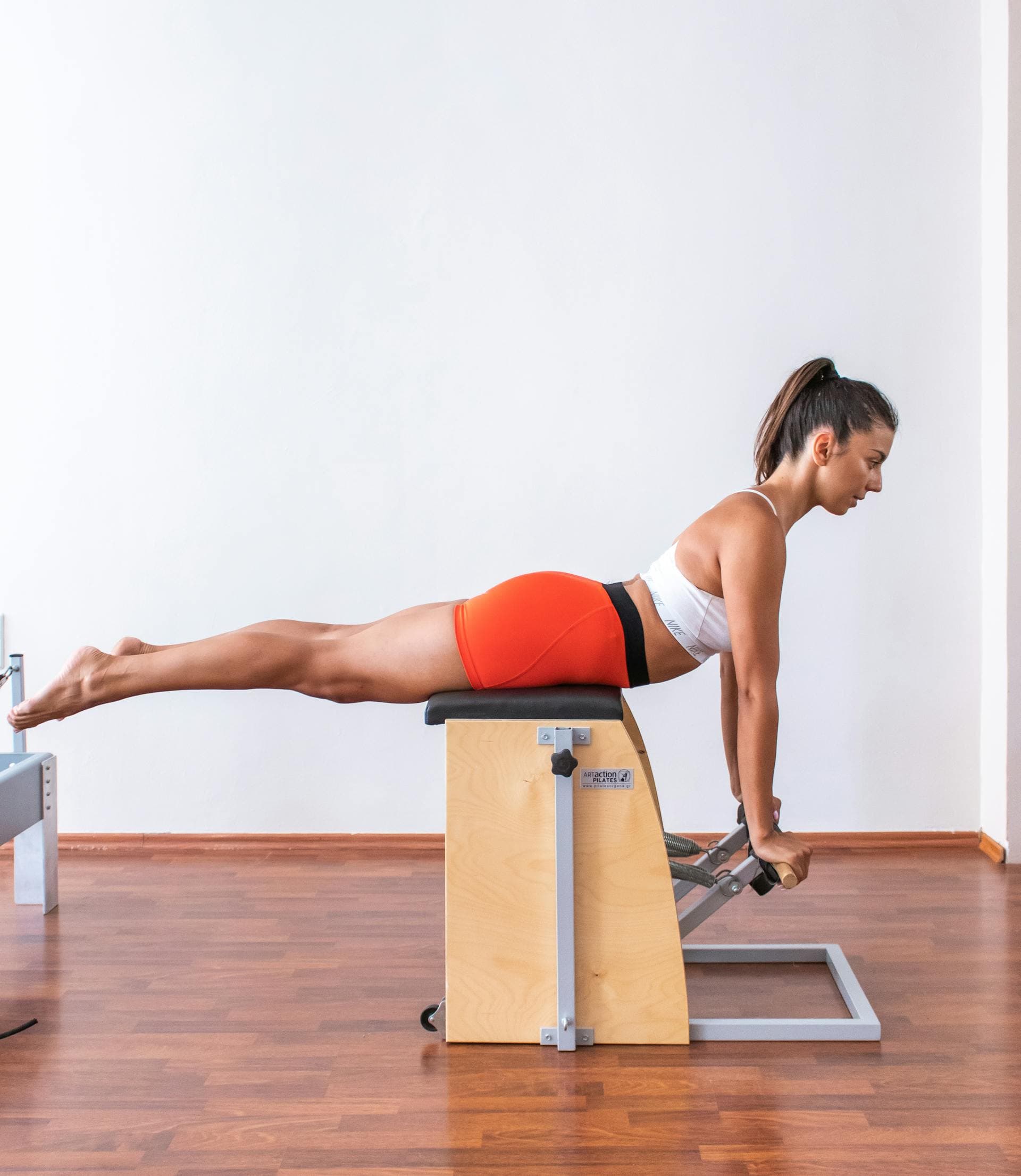
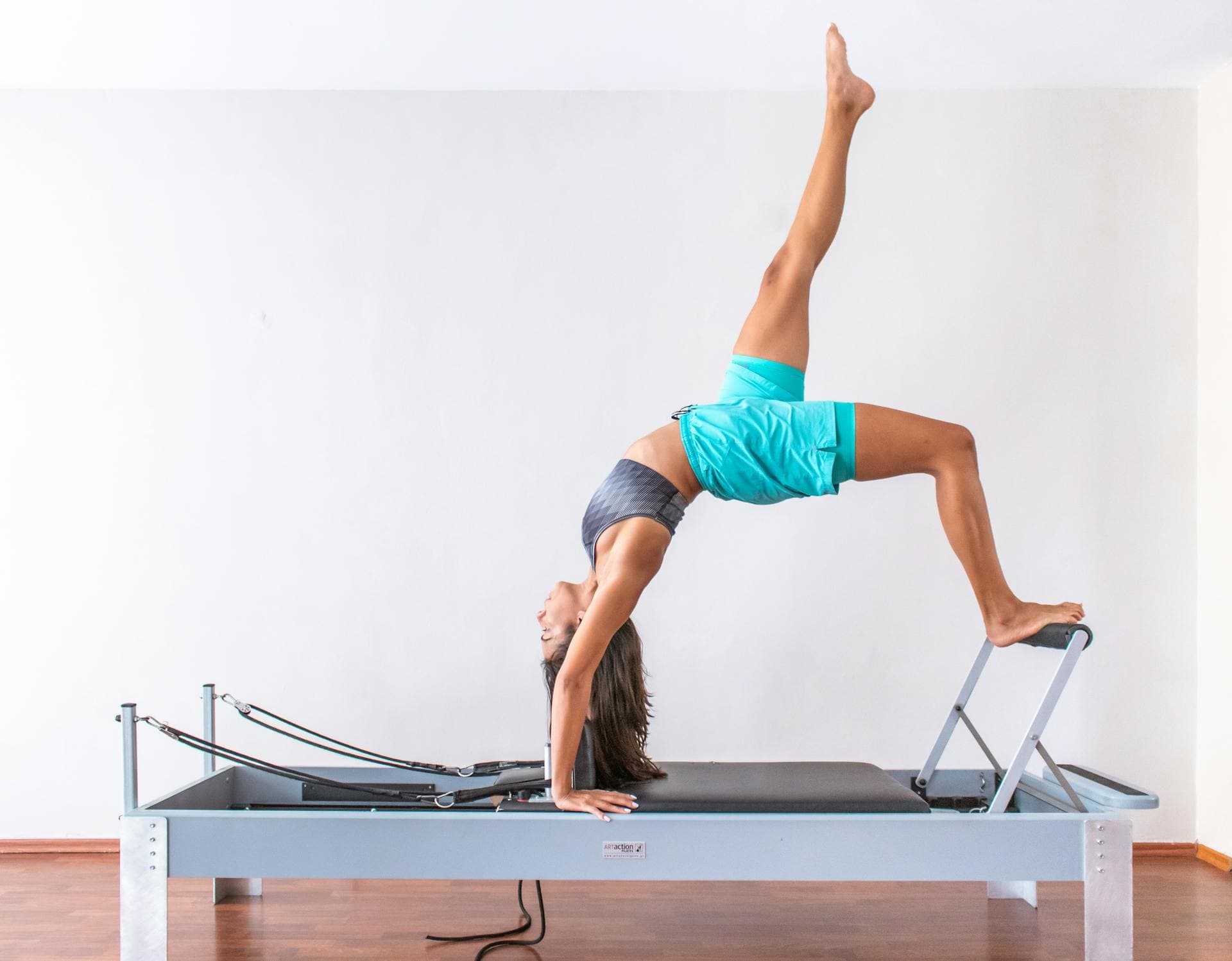
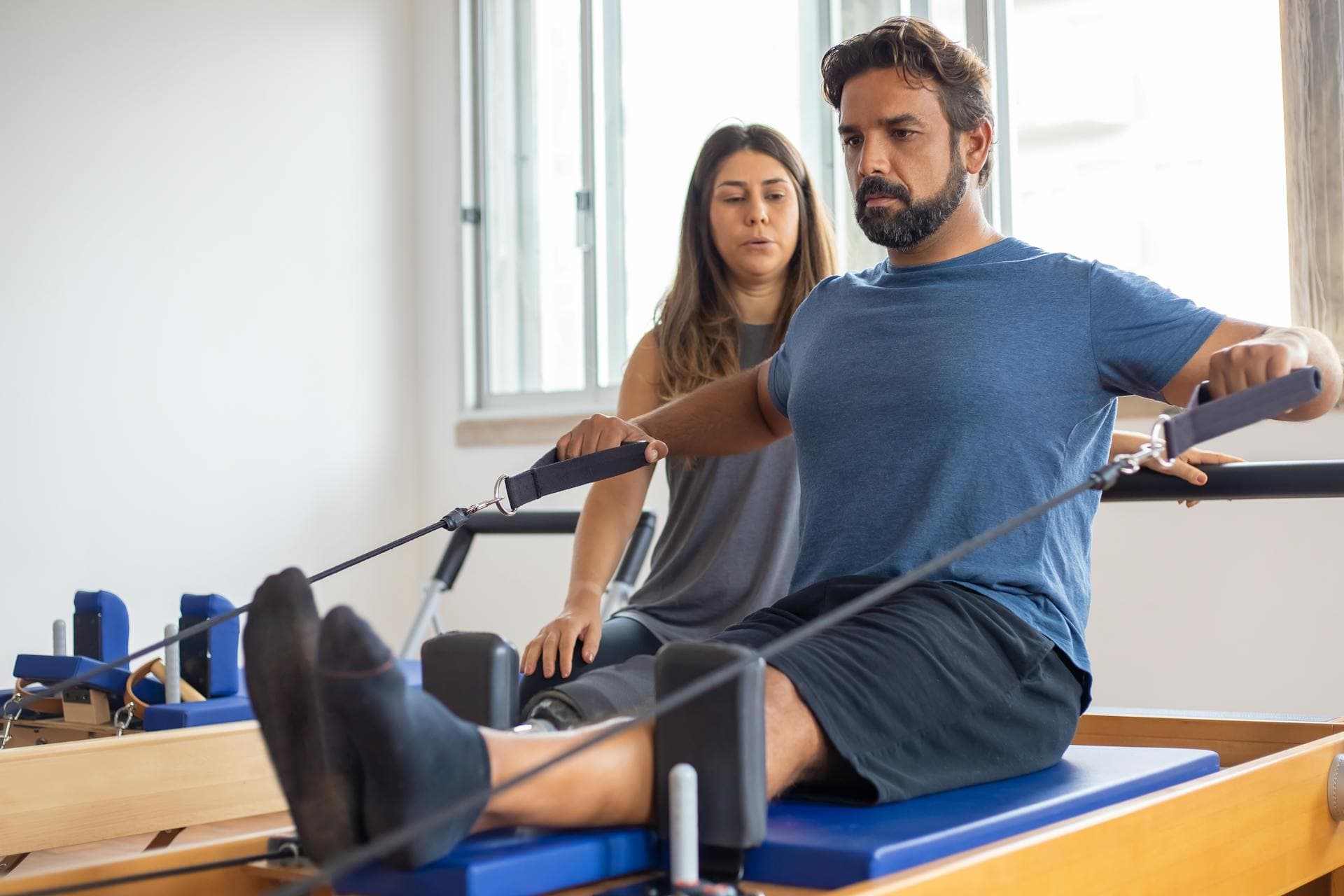
The apparatus makes breathing patterns both more challenging and more accessible. On the Reformer, the resistance of the springs demands sustained exhalation during pressing movements, which deepens powerhouse engagement automatically. On the Cadillac, the Breathing exercise — one of the first Joseph Pilates taught his clients — uses a push-through bar to open the chest while coaching the client through a full, lateral breath cycle. The Spine Corrector, shaped to match the natural curve of the thoracic spine, physically supports the ribcage in expansion, making it one of the most effective tools for clients who struggle to feel lateral breathing in other positions. You can see all of these apparatus at our studio.
Breathing Beyond the Studio
The benefits of improved breathing extend far beyond Pilates sessions. Ma and colleagues (2017), in a study published in Frontiers in Psychology, found that structured diaphragmatic breathing exercises significantly improved attention, reduced negative affect, and lowered cortisol levels in healthy adults. While Pilates uses lateral thoracic rather than abdominal breathing, the principle is shared: conscious, patterned breathing modulates the autonomic nervous system, shifting the body from sympathetic (stress) to parasympathetic (recovery) dominance. Many clients report that the breathing awareness they develop in Pilates sessions begins to surface unconsciously — at their desks, in traffic, during stressful conversations. This transfer of skill from the studio to daily life is one of the method's least advertised but most valuable outcomes.
Common Questions About Pilates Breathing
Clients frequently ask: 'Won't I suffocate if I don't breathe into my belly?' No. Lateral thoracic breathing uses the full capacity of the lungs — it simply directs the expansion differently. Others ask: 'Do I have to think about breathing during every exercise?' Initially, yes. Over time, the pattern becomes automatic, just as the other principles of the method do. The breath integrates into the movement until thinking about it feels like thinking about walking — you can do it, but you don't need to. Check our FAQ for more common questions about starting Pilates.
A Lifetime of Better Breathing
Joseph Pilates wrote that he wanted his method to teach people to breathe correctly. Not as an abstract wellness goal, but as a concrete physical skill that underpins every other movement ability. Lateral thoracic breathing stabilises the spine, coordinates the deep musculature, sharpens concentration, and creates the internal rhythm that makes a Pilates session feel like a single flowing movement rather than a series of disconnected exercises. It is, in many ways, the principle that holds all the other principles together. You don't master it in a day. You refine it over months and years. And like everything in classical Pilates, the depth you find in it grows with the depth of your practice. View our timetable to experience it in practice, or explore our pricing to plan your programme.