Walk into most fitness studios today and you'll find something called 'Pilates.' Upbeat music, fast transitions, maybe a reformer, maybe not. It looks athletic. It feels modern. But it bears little resemblance to the method Joseph Hubertus Pilates spent a lifetime developing — a system he called Contrology, and one that was never meant to be a workout at all.
The Origins: From Mönchengladbach to Manhattan
Joseph Pilates was born in Mönchengladbach, Germany, in 1883. A sickly child plagued by asthma, rickets and rheumatic fever, he devoted his life to understanding the body. He studied anatomy, yoga, martial arts, gymnastics, and the movement patterns of animals. During World War I, interned on the Isle of Man, he rigged springs to hospital beds so bedridden patients could exercise — the earliest prototype of the apparatus that would later furnish his New York studio.
In 1926, Pilates and his wife Clara opened a studio at 939 Eighth Avenue in Manhattan, sharing an address with the New York City Ballet. Dancers were among his first devoted clients: George Balanchine sent injured dancers to 'Uncle Joe,' and Martha Graham studied with him personally. What drew them wasn't the exercises themselves — it was the system. A logical, progressive sequence of movements that prepared the body for increasing complexity, building strength without bulk, flexibility without instability, and control without tension.
The Lineage: How the Method Survived
That system still exists, taught today through a direct pedagogical lineage. Romana Kryzanowska, who trained under Joseph and Clara Pilates for decades, became the primary custodian of the method after Joseph's death in 1967. She preserved the original exercise order, the apparatus specifications, and the teaching philosophy — passing it on to the next generation of classical instructors. When we say 'classical Pilates,' we mean this unbroken chain of knowledge, not a brand name. You can read more about Katie's training in this tradition and how it shapes every session at the studio.
"I chose classical Pilates because I wanted to teach something real — not a diluted version of someone else's method, but the original system exactly as it was designed. Every correction I give my clients comes from that lineage." — Katie Kollar
The Apparatus: Six Machines, One System
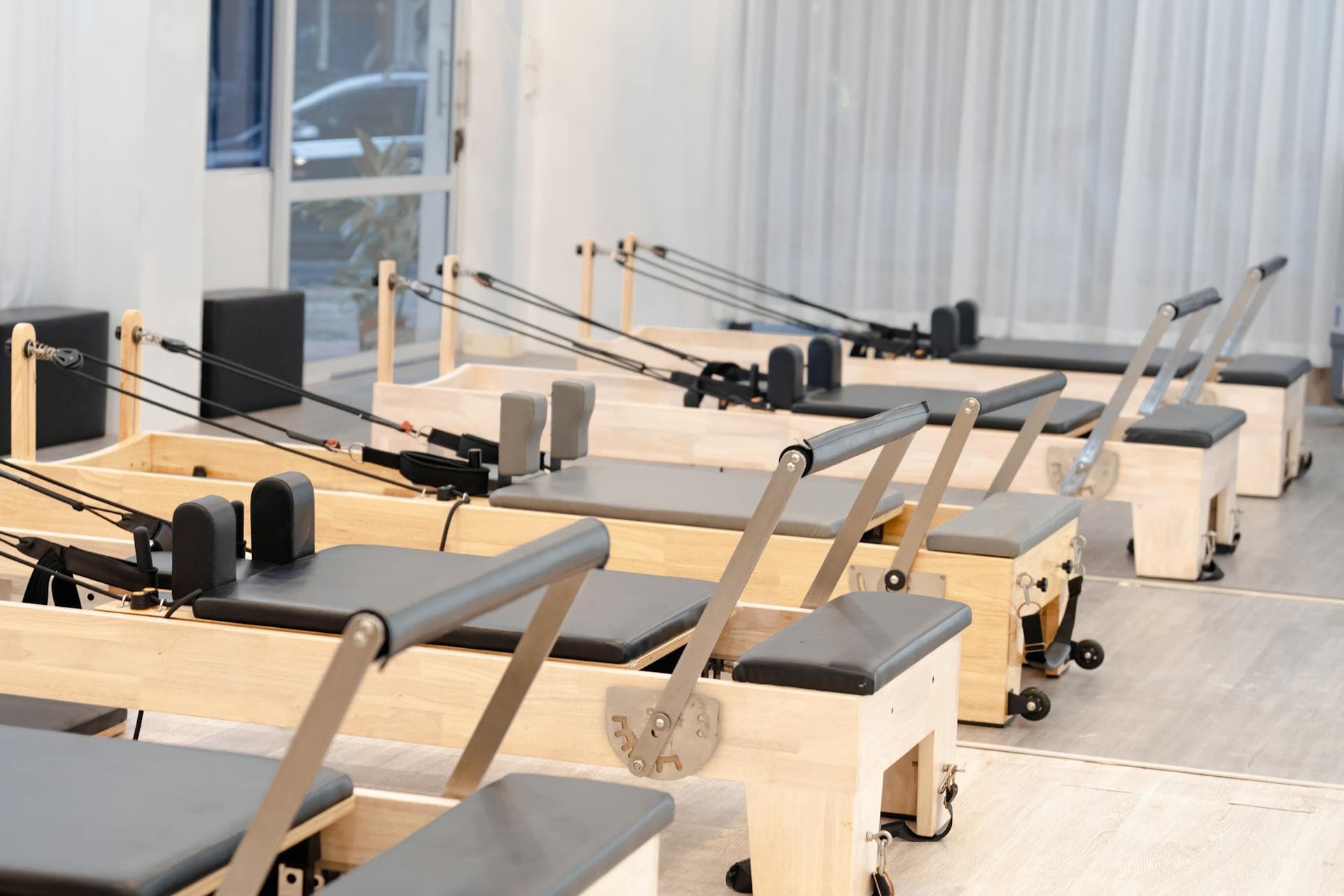
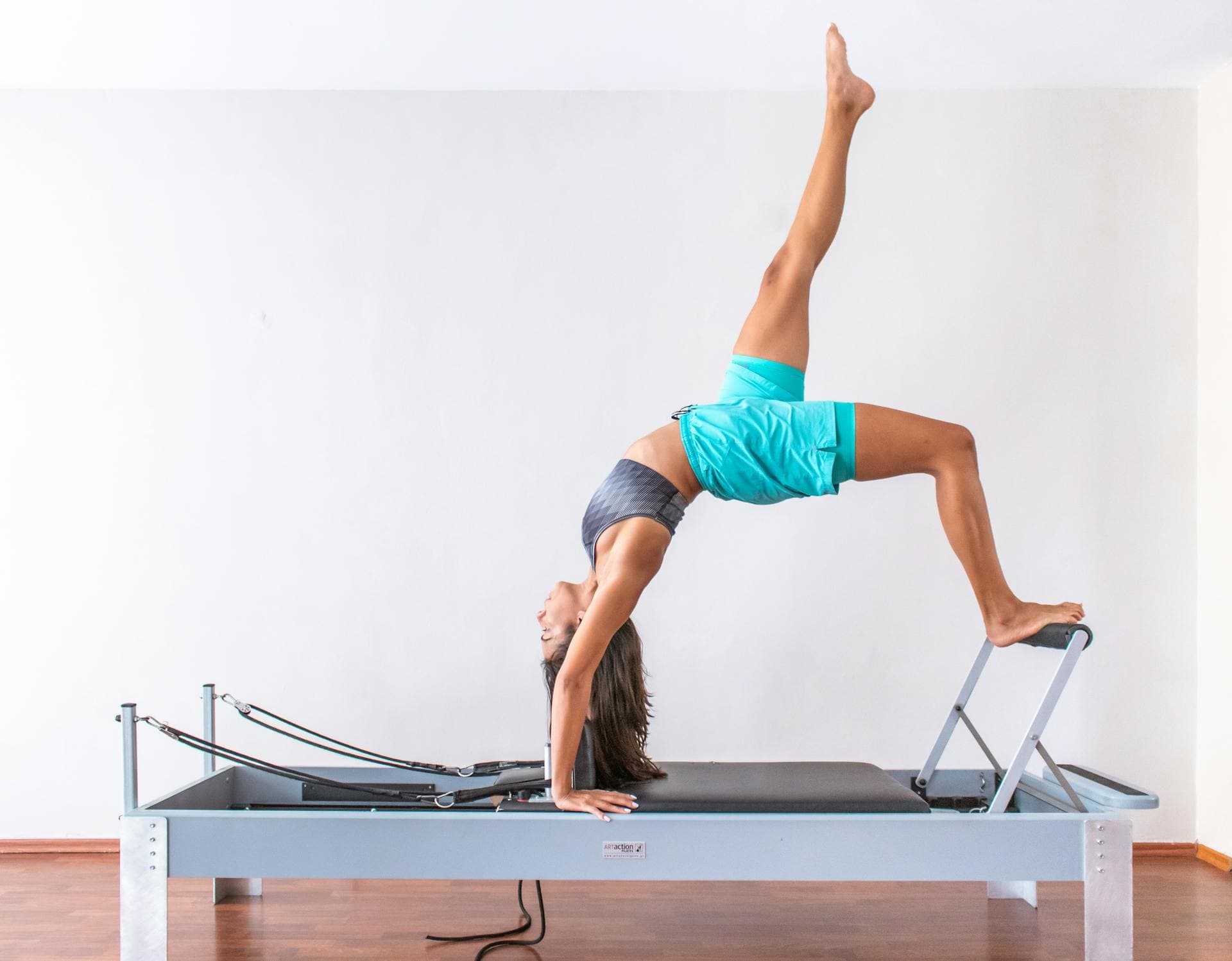
The exercise catalogue is vast: over 500 movements spanning seven primary pieces of apparatus — the Reformer, Cadillac (also called the Trapeze Table), Wunda Chair, High Chair, Ladder Barrel, Spine Corrector, and Pedi-Pole — plus the original 34-exercise mat sequence. Each apparatus was designed by Joseph Pilates himself. The Reformer uses a sliding carriage and calibrated springs to add resistance or assistance. The Cadillac, with its overhead bars and hanging springs, enables spinal traction and three-dimensional movement work. The Wunda Chair compresses the full body into a small footprint, demanding extraordinary stability. None of these are accessories — they are integral components of a single, coherent system. You can see all of these apparatus in action when you visit our Wels studio.
The Classical Order: Why Sequence Matters
What makes the method 'classical' is the order. Unlike contemporary adaptations, where instructors freely mix and rearrange exercises, the classical approach follows a deliberate sequence on each piece of apparatus. On the mat, you begin with the Hundred — not because it's easy (it isn't), but because it warms the blood, deepens the breath, and demands immediate engagement of the powerhouse. Each subsequent exercise builds on what came before: the Roll Up prepares the spine for the Rolling exercises; the Single Leg Stretch sets up the Double; the Spine Stretch Forward opens the posterior chain before the Open Leg Rocker demands balance on it. Skip or rearrange the order and you lose the logic that makes the system work. This is also why we use a structured levels system — progression is built into the method itself.
The Powerhouse: More Than Just 'Core'
The term 'Powerhouse' deserves its own explanation because it's widely misunderstood. Modern fitness often reduces it to 'the core' or 'the abs.' In the classical method, the Powerhouse refers to a three-dimensional cylinder of musculature running from the bottom of the ribcage to the base of the pelvis: the transversus abdominis wrapping around the front, the multifidus and erector spinae supporting the back, the diaphragm forming the ceiling, and the pelvic floor forming the base. Research by Muscolino and Cipriani (2004) in the Journal of Bodywork and Movement Therapies confirms that this integrated concept distinguishes the Pilates 'Powerhouse' from the reductive 'core' used in general fitness. When engaged correctly, this cylinder creates intra-abdominal pressure that stabilises the lumbar spine and generates the force from which every limb movement originates. You don't 'switch it on' like a light — you learn to sustain it through progressive challenge. For a deeper understanding of this concept, read our article on the six principles of Pilates.
Small Groups, Real Corrections
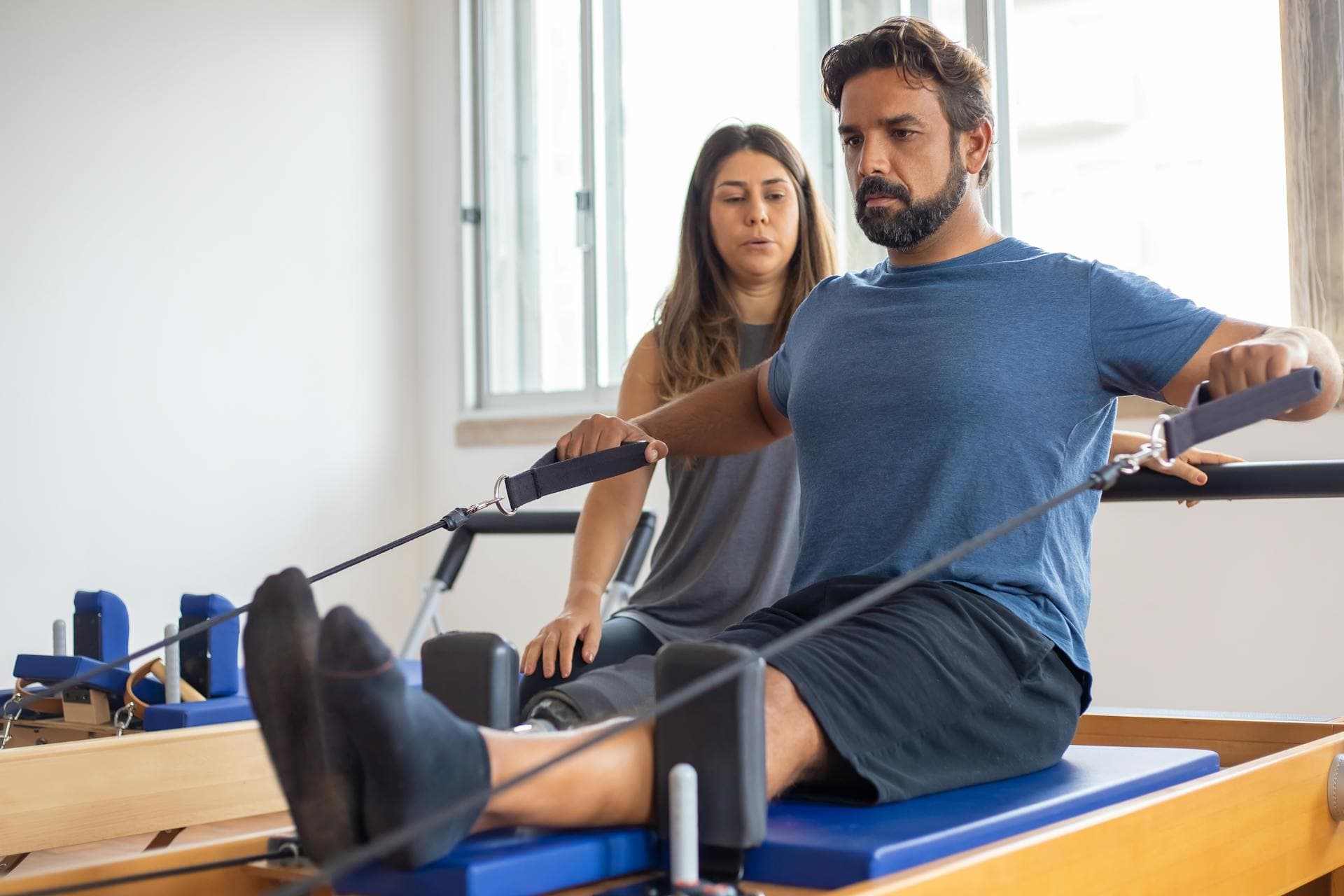
Another fundamental distinction is class size. In a classical studio, you'll rarely find more than five to eight people in a group session. This isn't a marketing choice — it's a pedagogical necessity. When every repetition matters more than the number of repetitions, the teacher needs to see every body in the room. A slightly dropped hip in the Side Kick series, a ribcage that flares during the Hundred, a neck that strains during the Roll Up — these details are what distinguish Pilates from generic exercise, and they can only be caught and corrected in a small group.
"I keep my classes small because I refuse to let anyone train uncorrected. If I can't see your hip dropping in the Side Kick, I'm not doing my job. That level of attention is what makes the method work." — Katie Kollar
A Typical Session
A typical session in a classical studio follows a recognisable arc. You might begin on the Reformer for 20 minutes — Footwork to establish alignment, then Hundred, Overhead, Coordination and a handful of pulling-strap exercises that open the chest and strengthen the upper back. From there, you move to the mat for the classical sequence appropriate to your level. The Cadillac might follow for specific spinal work — Breathing, Leg Springs, the Push-Through Bar series. The session might close with a few movements on the Wunda Chair or Barrel, chosen by the teacher based on what your body needs that day. The transitions between apparatus are part of the method: they keep the body warm, the mind alert and the energy continuous. See our timetable for available sessions.
Why Modern Pilates Looks Different
So why do most 'Pilates' classes look so different? In the 1980s and '90s, as the method moved from small studios to gyms and franchises, the classical order was often abandoned for variety, the apparatus was simplified, and class sizes grew. Instructors trained in weeks, not years. The result was something that borrowed the name and some of the movements, but lost the system — the progressive logic, the precision of corrections, the integration of apparatus that gives classical Pilates its transformative depth. Historian Penelope Latey documented this divergence in her 2001 paper in the Journal of Bodywork and Movement Therapies, noting how the method's philosophical foundations were frequently stripped away in commercial settings.
None of this means contemporary approaches have no value. But it does mean that if you've only experienced Pilates in a large gym class or via an app, you haven't yet experienced what Pilates actually is. The original method is quieter, slower, more demanding and more personal. It doesn't promise a burn — it delivers a systematic reorganisation of how you move, stand, breathe, and carry yourself through daily life.
Patience as Practice
Classical Pilates asks something of you: patience. You don't skip to the 'advanced' exercises any more than you skip to the final chapter of a novel. The method builds sequentially — Beginner, Intermediate, Advanced — and progression is earned through demonstrable control, not weeks on a calendar. Some people train for years before adding certain exercises to their repertoire. This isn't gatekeeping; it's respect for the body and the method both. If you're ready to begin, you can book a private introductory session or join a group class.
Joseph Pilates wrote in Return to Life Through Contrology (1945): 'In 10 sessions you'll feel the difference. In 20 you'll see it. In 30 you'll have a whole new body.' It's one of the most quoted lines in the Pilates world, and it remains as accurate today as when he first wrote it — provided you're working within the system he built.